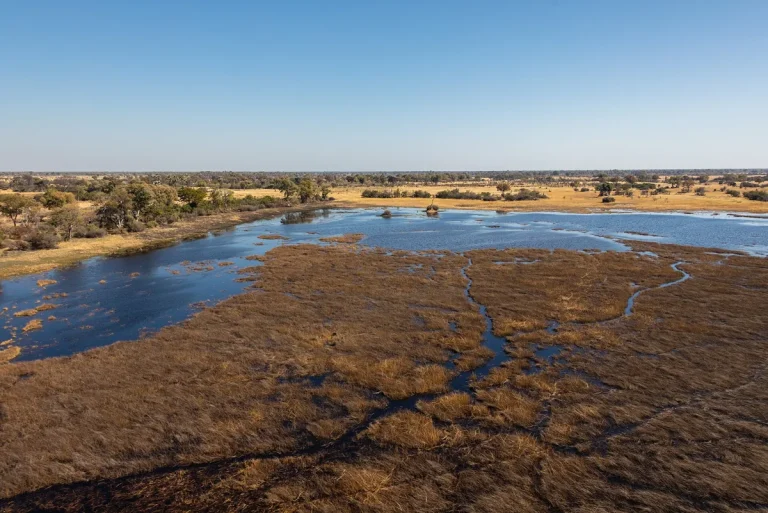
The Thamalakane is part of Maun’s setting and everyday geography. A photograph may show a broad reflective surface, reeds or a built edge, but it records one place at one time. Begin with that distinction when planning time near the river. The Botswana Tourism Organisation places Maun on the Thamalakane; it does not make every riverside address or access point interchangeable.
Read a view before making a plan
Notice the foreground as well as the horizon. A clear stretch of water does not establish a public path, a landing place or permission to enter. Buildings, roads and working spaces also shape access. Ask your accommodation or the provider of a specific activity where you should go, what the arrival arrangements are, and whether the plan is suitable for the conditions.
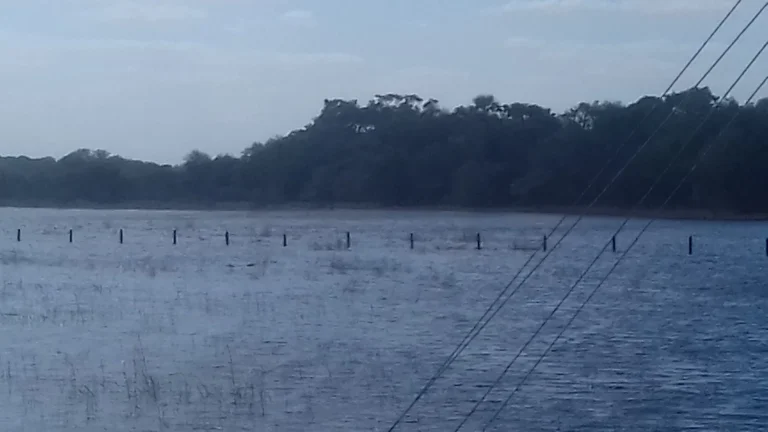
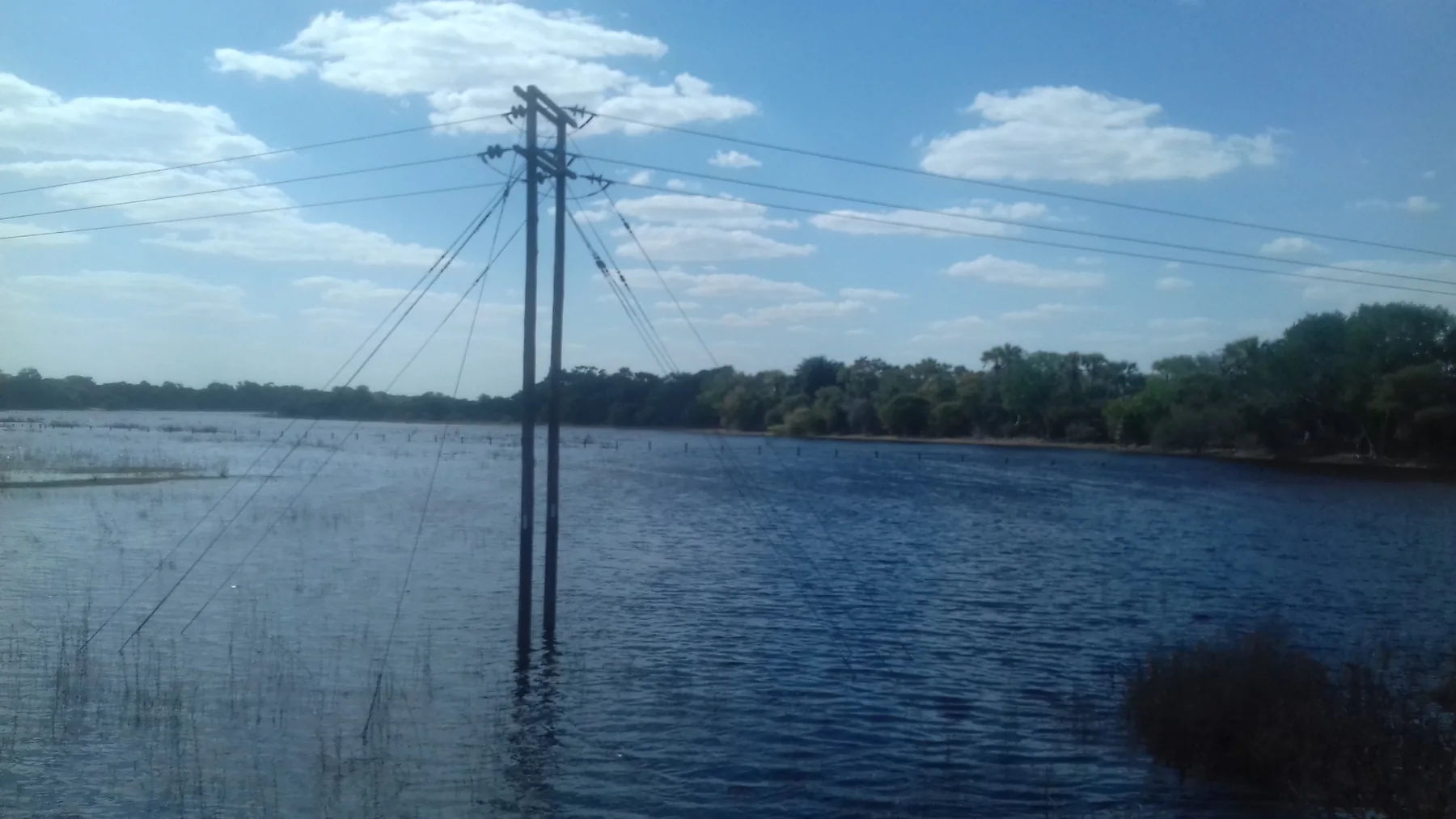
A source photograph’s date matters. The image used here was taken in July 2020 and includes an electricity supply line. It documents the relationship between water and infrastructure at that moment. It is not a current water-level report, a route map or evidence that an activity is operating today.
Separate three geographical ideas
The town’s riverfront, the wider delta and a protected-area journey are related contexts with different planning needs. UNESCO describes the Okavango as a changing inland wetland system, with permanent and seasonal water. The official Moremi overview describes a reserve within the wider Okavango landscape. Neither source turns a town stop into a booked visit to those places.
| Setting | Useful question | Avoid assuming |
|---|---|---|
| Maun riverfront | Where is visitor access appropriate? | Every bank has a public path. |
| Delta outing | Where does the experience actually operate? | A town photograph represents its conditions. |
| Moremi visit | What journey and arrangements are included? | It is simply a short riverside stop. |
Plan with a specific place in mind
Ask for the actual location rather than relying on a broad destination label. Explain whether you want a quiet view, an organised water activity or a longer wildlife journey. A local operator can then describe the arrangement they provide, including meeting points and what may change with conditions. Compare those details rather than choosing only from a dramatic image.
For a town-focused day, combine one suitable river stop with the practical ideas in spending time in Maun. For a separate journey, use the onward planning guide. Keep both plans flexible enough to respond to information from the people responsible for access and the activity.