
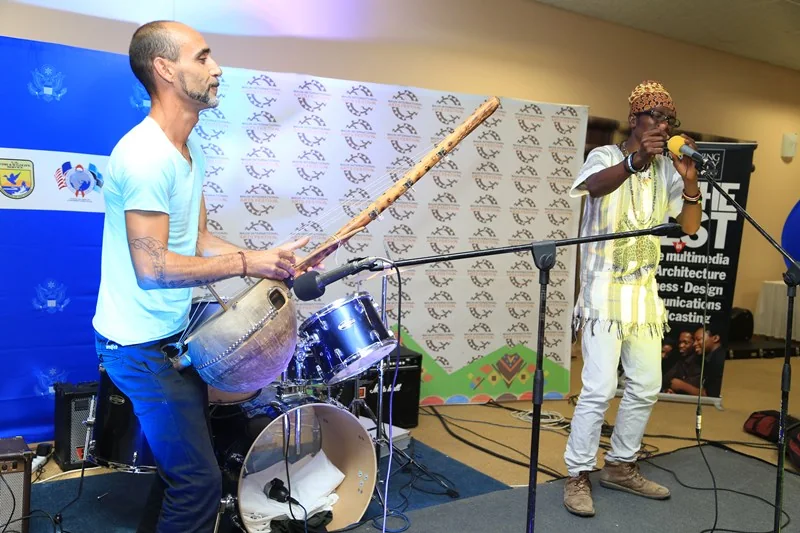
Creative life is one reason to look beyond Maun’s role in an onward itinerary. Music, spoken performance and other forms of expression belong to particular people, occasions and working contexts. A useful visitor approach begins with curiosity and clear attribution, rather than expecting one encounter to represent an entire community.
Use historical images honestly
The photograph accompanying this guide documents the Maun International Arts Festival in October 2015. The US Embassy Botswana’s credited image record identifies the occasion and describes Poetavango’s coordination. It establishes that particular event. It does not provide a present-day programme, identify every performer, or imply that the people pictured participate in this website.
That distinction is useful when looking through travel photographs. Ask when an image was made, who supplied the description and what it actually shows. A stage, exhibition or workshop can suggest questions to explore, but a dated photograph is not a booking notice. Keep current event enquiries separate from the historical material that first caught your attention.
Ask what is happening during your visit
When a performance, exhibition or workshop interests you, find the organiser’s current information. Confirm the location, the audience arrangements and whether advance booking is needed. Avoid planning around a timetable copied from an older article. If no event fits your dates, there is still value in learning about a local creative organisation and returning to its work later.
- Use the organiser’s own spelling for the event and participants.
- Ask whether photography or recording is welcome.
- Check before sharing a close portrait or an image of an artwork.
- Distinguish an admission ticket from a purchase or donation.
Keep encounters specific
A conversation with a maker or host is an exchange with that person, not a shortcut to describing a whole place. Give people room to decline a photograph or a question. If you buy something, ask how the work was made and who made it rather than attaching a broad cultural label yourself. This guide does not invent resident interviews, quotations or claims of participation.
Everyday food and town routines also deserve ordinary attention. A menu, a market visit or a café stop is best understood through the establishment and people involved. Ask what is available and make practical arrangements directly; no image on this site guarantees that a particular venue is open or recommended.
Leave time around the event
Plan how you will reach the venue and return to your accommodation, and keep that arrangement distinct from a safari transfer. The guides to time in town and choosing a base help organise that space in the day. A single considered visit is more useful than collecting a list of hurried stops.

.jpg)